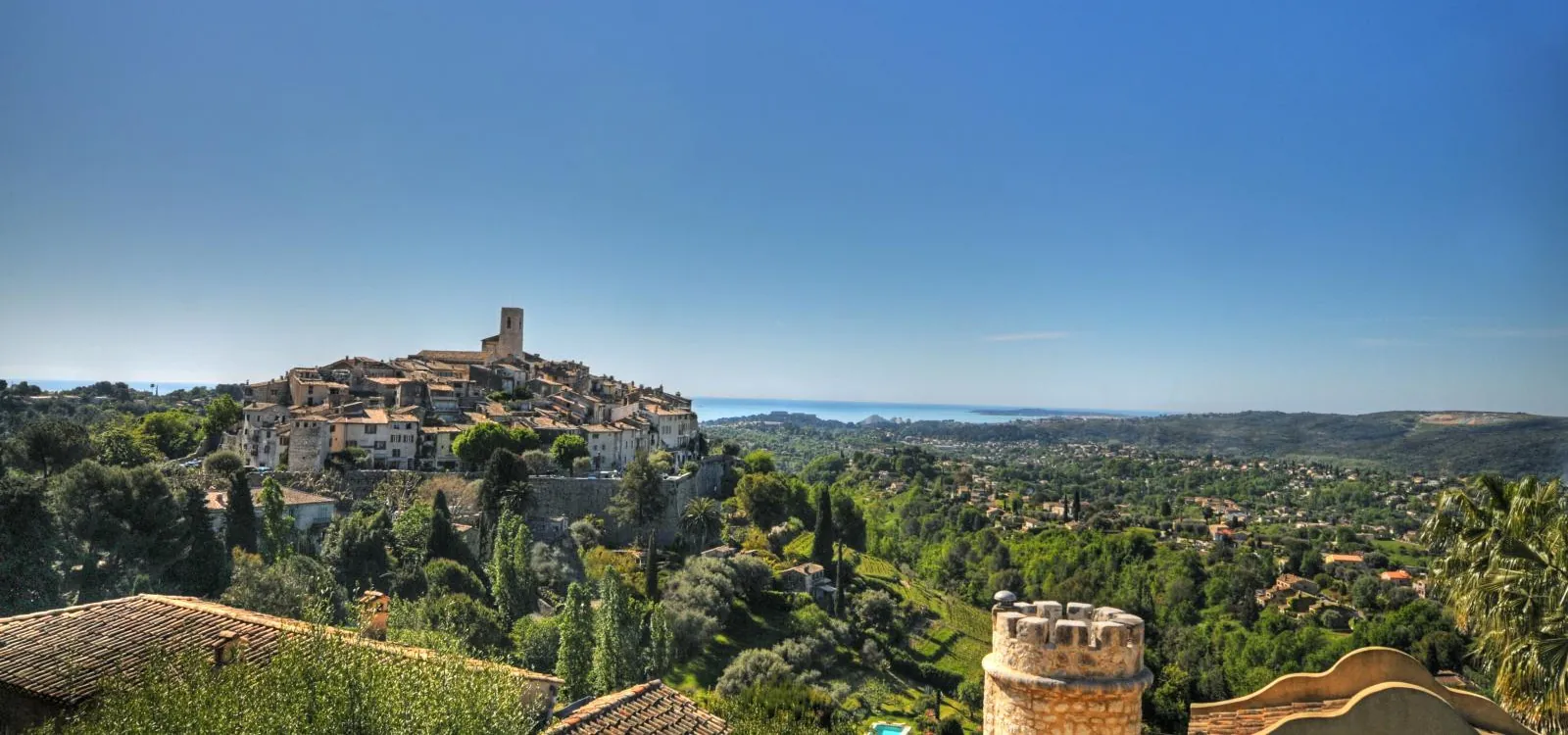
Saint-Paul-de-Vence has been an oppidum, a stronghold on the border of the County of Nice, and then an artists’ village. Its ramparts, ordered by Francis I, are still there. Here are the key dates in its history, according to the village’s official website, and what you need to prepare a visit.
From its origins to a stronghold
Since Antiquity, an oppidum occupied the Puy plateau. The settlement then gathered around the former church of Saint-Michel du Puy and the castle, giving birth to the castrum of Saint-Paul. In the 14th century, Saint-Paul became the seat of an important bailiwick.
In 1388, the County of Nice broke away from Provence: Saint-Paul became a frontier stronghold. Ramparts were raised in the second half of the 14th century.
The ramparts of Francis I
Occupied in 1524 and then besieged in 1536 by the troops of the King of Spain, the village was deeply remodelled after Francis I’s visit in 1538, at the time of the Congress of Nice. In June 1538 the king decided to build a new bastioned wall, designed by Jean de Saint-Rémy. The battle of Ceresole, in 1544, recalls the importance of the site. Vauban inspected the ramparts in 1693 and in 1700.
The artists’ village
In the early 1920s, artists discovered Saint-Paul: the site names Paul Signac, Raoul Dufy, Chaïm Soutine, Matisse, Picasso, Jacques Prévert, James Baldwin and Marc Chagall. In 1932, a place became the inn of La Colombe d’Or. The Fondation Maeght was inaugurated in 1964, and the chapel decorated by Jean-Michel Folon opened in 2008.
Preparing the visit
The village is explored on foot, street after street, with the ramparts as a guiding thread. Today’s galleries and art workshops give this artistic past a second life. For a visit programme and the Fondation Maeght, read our article on Saint-Paul-de-Vence from Nice and our day of art between Cap-Ferrat and Vence.
Who this article is for, and when to reread it
- History enthusiasts, who want to understand why a village is ringed by ramparts.
- Art lovers, preparing for the Fondation Maeght or the galleries.
- Before each visit: opening times of cultural venues change.
Conclusion
A frontier stronghold turned artists’ village: in Saint-Paul-de-Vence, the ramparts of Francis I and today’s workshops tell the same story.
Sources consulted on 28 November 2026: Saint-Paul de Vence, Moments in history (French).
This blog is published by Vehira, a VTC (chauffeur-driven vehicle) company. Links to maison-vehira.fr lead to our website. Information checked in November 2026; journey times are indicative and vary with traffic.