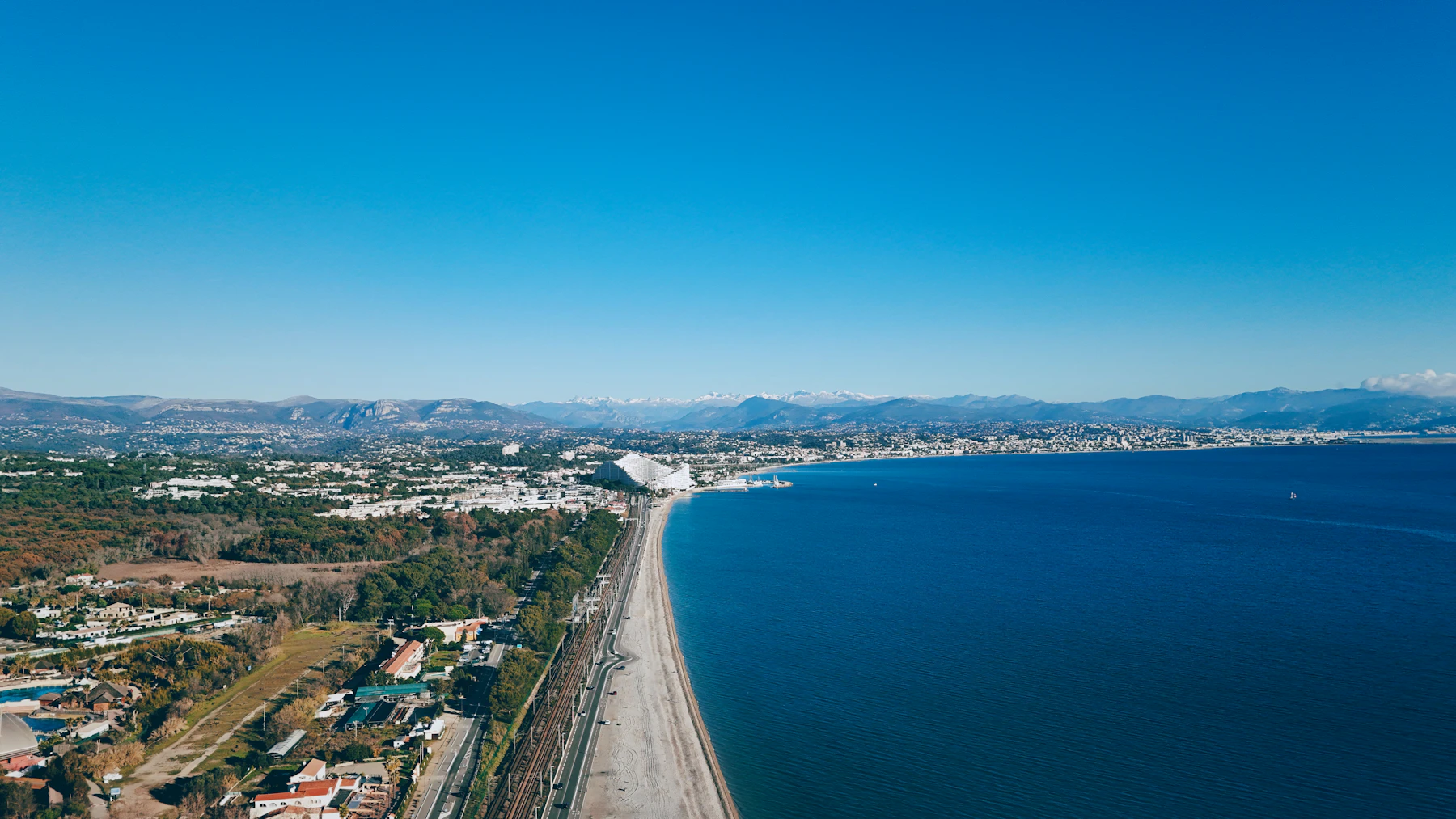
Between Cagnes-sur-Mer and Antibes, west of the mouth of the Loup, Villeneuve-Loubet has two stories: that of a village founded in the 13th century, where Francis I stayed in 1538, and that of Auguste Escoffier, the chef born here in 1846. Here are the landmarks, according to the sources consulted, and what you need to prepare a visit.
A village founded in the 13th century
Villeneuve-Loubet lies on the coast, west of the mouth of the Loup, between Cagnes-sur-Mer and Antibes, 15 km west of Nice. The village was founded in the 13th century (around 1234) by Romée de Villeneuve. Its castle consists of four buildings around a trapezoidal inner courtyard, a pentagonal keep and four corner towers. The lordship passed to the Lascaris family in the 16th century.
The village was invaded by the armies of Charles V in 1524 and 1536. In 1538, Francis I chose the castle as his base: he stayed there several days to negotiate the Truce of Nice.
Auguste Escoffier, child of the village
Auguste Escoffier was born in Villeneuve-Loubet on 28 October 1846 and died in Monte-Carlo on 12 February 1935. At 13, he began as a kitchen boy at the Restaurant Français, an establishment in Nice run by one of his uncles. His career took him to Paris (Le Petit Moulin Rouge), to the army in 1870, to the Grand Hôtel de Monte-Carlo, then to London, at the Savoy (1890) and the Carlton (from 1899), and to the Ritz in Paris.
He rationalised the distribution of tasks in the kitchen with the brigade concept, and published Le Guide culinaire in 1903. Peach Melba was created in 1893 for the singer Nellie Melba at the Savoy Hotel in London. He was made a knight of the Legion of Honour on 11 November 1919, then an officer in 1928.
The museum of culinary art
The Escoffier Museum of Culinary Art occupies his birthplace, in the old village. Opened in 1966, it offers a temporary exhibition every summer: the theme announced for summer 2026 is “Auguste Escoffier, a humanist”, devoted to his social and humanist commitment. Opening times change: check them before you go.
Other places to know
The commune also has the Museum of History and Art (a former military museum), the Tour de la Madone (13th century), the Vaugrenier nature park, crossed by the Via Julia Augusta, and the Château de Vaugrenier (late 16th century). On the coast, Marina Baie des Anges, built from 1969 to 1992 by the architect André Minangoy, is one of the most recognisable complexes on the coast.
Who this article is for, and when to reread it
- History enthusiasts, who want to understand the 1538 Truce of Nice.
- Food lovers, preparing a visit to the Escoffier museum.
- Before each visit: opening times and exhibitions change.
Conclusion
From a 13th-century castle to Escoffier’s birthplace, Villeneuve-Loubet links the history of the Riviera with that of great cuisine.
Sources consulted on 28 November 2026: Villeneuve-Loubet, Wikipedia (French), Auguste Escoffier, Wikipedia (French) and Escoffier Museum of Culinary Art. Cover photo: Naturis Altum, Unsplash (Marina Baie des Anges, Villeneuve-Loubet; Unsplash license).
This blog is published by Vehira, a VTC (chauffeur-driven vehicle) company. Links to maison-vehira.fr lead to our website. Information checked in November 2026; journey times are indicative and vary with traffic.